
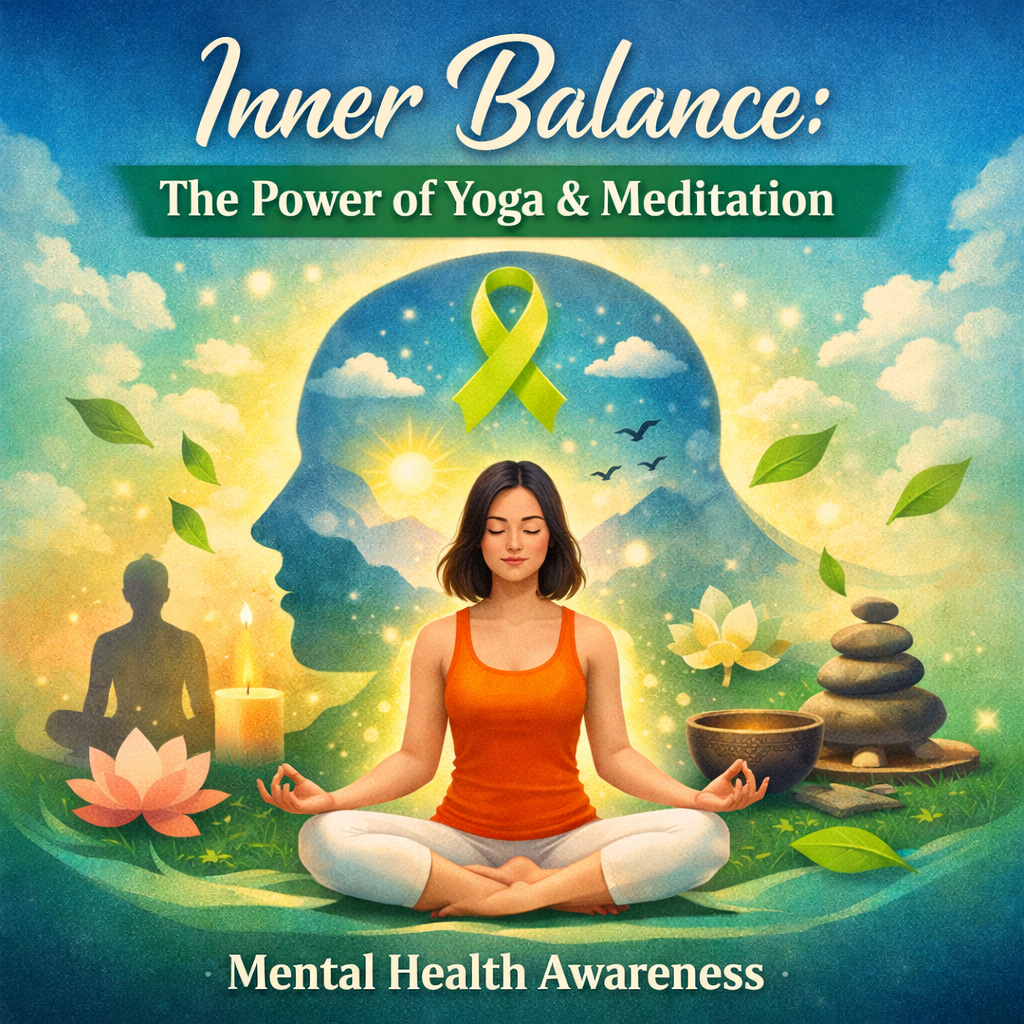
Inner Balance: The Power of Yoga & Meditation
Finding calm in a busy day can seem like a dream. Many live fast-paced lives with little quiet time. Yet, finding inner peace is closer than you think.

mental health awareness
Yoga helps you connect with your body and breath. These ancient practices do more than just keep you fit. They guide you to emotional stability and clarity in a noisy world.
By meditating daily, you can quiet the world’s constant noise. This simple act boosts mental health awareness and overall well-being. It helps you find a steady sense of inner balance.
Key Takeaways
- Yoga improves physical flexibility and mental focus.
- Meditation reduces stress and promotes calm.
- Being aware of your thoughts leads to better choices.
- Ancient practices are still relevant today.
- Small daily habits lead to lasting harmony.
- Putting your well-being first improves your life quality.
The Ancient Roots of Wellness
Exploring the history of yoga and meditation shows their big impact on wellness. These practices have been part of India’s culture and spirituality for centuries. They have changed over time to meet the needs of different people.
Knowing the ancient roots of yoga and meditation helps us see their role in promoting wellness. By looking at their origins and how they’ve evolved, we learn more about their benefits.
Tracing the Origins of Yoga in India
Yoga started in ancient India, going back to the Indus Valley Civilization. It aimed to unite the body, mind, and spirit through postures, breathing, and meditation. The yoga origins are tied to Hinduism and the search for spiritual enlightenment.
- The earliest yoga mentions are in the Rig Veda, a sacred Hindu text.
- Over time, yoga grew, with big contributions from sages like Patanjali, who wrote the Yoga Sutras.
- Yoga took many forms, like Hatha Yoga, Raja Yoga, and Bhakti Yoga, each focusing on different aspects.
The Evolution of Meditation Practices
Meditation has also been key in Indian culture, evolving with yoga. It was used to calm the mind, find inner peace, and connect with a higher consciousness. The meditation practices have been shaped by various spiritual traditions, including Buddhism and Jainism.
- Meditation techniques got better over centuries, focusing on mindfulness and concentration.
- Meditation was often paired with yoga postures and breathing to offer a complete wellness approach.
- Many meditation types emerged, like loving-kindness meditation and transcendental meditation, each with its own benefits.
Learning about yoga and meditation’s history and evolution gives us insight into their wellness role. By understanding their ancient roots, we can see their importance today.
Yoga and Meditation for Mental Health Awareness
Yoga and meditation have been around for ages. They’re now recognized for boosting mental health. These practices help us understand and manage our mental health better.
More people are looking for ways to support their mental health. Yoga and meditation are leading the way. They offer a unique mind-body approach to health.
Breaking the Stigma Through Mindful Living
Mindful living is a key part of yoga and meditation. It teaches us to live in the moment and observe our thoughts without judgment. This can help reduce the stigma around mental health by creating a more open and understanding society.
Yoga and meditation help us become more aware of our mental state. They can make it easier to handle life’s challenges. Studies show they can lower stress hormones, which helps with anxiety and depression.
Mindfulness practices are great for work too. They improve focus and productivity while cutting down stress. This makes the workplace a better place to talk about mental health.
How Ancient Wisdom Addresses Modern Psychological Challenges
Yoga and meditation offer solutions to today’s mental health problems. Techniques like pranayama (breath control) and dhyana (meditation) help manage stress and anxiety. They give us tools to handle our mental health.
| Practice | Benefit |
| Yoga Asanas | Reduces stress and anxiety |
| Meditation | Improves emotional regulation |
| Pranayama | Enhances respiratory and cardiovascular health |
The Physiological Connection Between Breath and Mind
Understanding the link between breath and mind opens new doors to mental clarity and emotional balance. The breath is a strong tool that affects both our body and mind.
Pranayama, or conscious breathing, comes from ancient yoga. It uses various techniques to control the breath. This affects the nervous system and our overall health.
The Science of Pranayama and Nervous System Regulation
Pranayama greatly impacts nervous system regulation. By using specific breathing methods, people can activate the parasympathetic nervous system. This promotes relaxation and lowers stress.
- Alternate Nostril Breathing: Balances the left and right hemispheres of the brain.
- Bellows Breath: Stimulates the nervous system and increases alertness.
- 4-7-8 Breathing: Promotes relaxation and helps in falling asleep.
Reducing Cortisol Levels Through Conscious Breathing
Conscious breathing can reduce cortisol levels, easing stress on the body. High cortisol levels cause anxiety, weight gain, and other health problems.
A study showed pranayama can lower cortisol levels. This leads to calmness and well-being.
- Start with short sessions (5-10 minutes) and gradually increase the duration.
- Practice at the same time every day to establish a routine.
- Combine with other relaxation techniques like meditation or yoga.
Adding conscious breathing to daily life helps manage stress and boosts mental health.
Essential Yoga Poses for Emotional Stability
Yoga has many poses that help with emotional stability. They create a balanced life. By doing certain yoga poses, people can handle stress and anxiety better. This leads to a happier life.
Grounding Asanas for Anxiety Relief
Grounding asanas are great for easing anxiety. They help you stay in the present moment. These poses calm your nervous system and lessen feelings of being overwhelmed.
- Mountain Pose (Tadasana): Makes you feel grounded and stable.
- Downward-Facing Dog (Adho Mukha Svanasana): Stretches and relaxes your body, helping you feel calm.
Heart-Opening Poses to Release Emotional Tension
Heart-opening poses help release emotional tension. They expand your chest and improve heart health. These poses make you feel more open and vulnerable.
- Cobra Pose (Bhujangasana): Opens your chest, boosting your mood and reducing stress.
- Camel Pose (Ustrasana): Stretches your chest and helps release emotions.
Balancing the Nervous System with Child’s Pose
Child’s Pose, or Balasana, is calming for the nervous system. It promotes relaxation. It’s great for those feeling anxious or upset.
Cultivating Strength and Focus with Warrior Sequences
Warrior sequences build strength, focus, and confidence. These poses help you feel stronger and more resilient inside.
| Pose | Benefits |
| Warrior I (Virabhadrasana I) | Strengthens legs, improves balance and focus |
| Warrior II (Virabhadrasana II) | Enhances strength, stability, and concentration |
Meditation Techniques for Modern Stress Management
Today’s life can feel too much, but meditation helps find calm. It’s a way to build emotional strength. Adding meditation to your day can bring balance and peace.
Mindfulness Meditation for Daily Clarity
Mindfulness meditation keeps you in the moment, without judgment. It reduces stress by focusing on breathing. Regular practice improves mental clarity and calmness.
To start, find a quiet spot. Close your eyes and breathe deeply. Focus on the breath. If your mind strays, gently return to the breath.
Loving-Kindness Practice for Emotional Resilience
Loving-kindness meditation, or Metta, builds love and kindness. It’s great for emotional strength and a positive view of life.
Start by wishing yourself happiness and health. Then, wish kindness for others, including those you might find hard to get along with. This breaks down emotional walls and connects us all.
Guided Visualization for Inner Peace
Guided visualization uses your imagination for relaxation. It’s good for reducing stress and anxiety. It distracts from negative thoughts and brings calm.
Find a quiet spot to relax. Listen to a guided recording or imagine a peaceful place. Use all your senses to make the scene real.
Using these meditation methods daily can make you more emotionally resilient. It helps manage stress and brings inner peace.
Creating a Sacred Space for Practice at Home
The place where you do yoga and meditation is key to your mental and emotional health. Having a special spot at home can really help your practice. It can make your life more balanced and fulfilling.
Designing a Minimalist Sanctuary
To make a minimalist sanctuary, clean up the area and add things that bring peace. Here are some tips:
- Use natural light and ventilation.
- Incorporate plants for a touch of nature.
- Choose a calming color palette.
The Role of Environment in Mental Focus
The place you practice in affects how well you can focus and stay calm. A messy and loud area can pull you off track. But a quiet and tidy space helps you stay clear-minded.
To make a good sacred space, think about these things:
| Element | Description | Benefit |
| Natural Light | Use sunlight to illuminate the space | Boosts mood and energy |
| Calming Colors | Use soothing colors on walls and decor | Promotes relaxation |
| Minimal Decor | Keep the space clutter-free and simple | Enhances focus |
By carefully planning your home practice area, you can significantly enhance your yoga and meditation practice. This leads to better mental clarity and emotional balance.

sacred space
Overcoming Common Barriers to Consistent Practice
Many people start yoga and meditation with excitement. But, keeping up with it can be tough. This is because of several obstacles.
Common barriers include lack of time, physical discomfort, and mental resistance. Knowing these challenges is the first step to finding solutions.
Managing Time Constraints in a Busy Schedule
Time is a big challenge for many. Life moves fast, making it hard to find time for yoga and meditation.
But, even a little time each day can help. Starting with short sessions of 10-15 minutes is a good start. It’s about prioritizing your well-being in your daily routine.
- Begin with a manageable schedule, such as practicing at the same time each day.
- Identify pockets of time in your daily routine that can be utilized for practice, such as early morning or during lunch breaks.
- Be flexible and adapt your practice to fit your schedule, even if it means shorter sessions on busy days.
Dealing with Physical Discomfort and Resistance
Physical discomfort or resistance to certain yoga poses can also hinder consistent practice. It’s important to remember that yoga is not a one-size-fits-all practice.
Modifying poses or using props can make practice more comfortable. Listening to your body and honoring its limits is key for a lasting practice.
| Common Discomforts | Possible Solutions |
| Lower back pain | Modify forward bends, use blocks or straps |
| Knee issues | Avoid deep knee bends, use support under the knees |
| Neck strain | Modify shoulder stands, use a bolster or pillow |
By tackling these common barriers and being flexible and compassionate, you can build a consistent yoga and meditation practice. This practice can greatly improve your well-being.
Integrating Mindfulness into the Indian Lifestyle
Mindfulness is becoming a big part of the Indian lifestyle. It combines old traditions with today’s needs. This practice has deep roots in Indian culture and is now helping people deal with today’s life challenges.
Balancing Traditional Values with Contemporary Demands
India’s rich culture is a strong base for mindfulness. It values respect for elders, community, and spiritual growth. These values are being mixed with today’s demands like work and technology. This mix is key for keeping minds healthy in our fast-changing world.
- Respect for nature and the environment
- Emphasis on community and family ties
- Spiritual practices like yoga and meditation
These values are being updated for today’s life. This way, mindfulness stays true to its roots but is also open to more people.
Community Practice and Social Support Systems
Community is a big part of mindfulness in India. Group meditation and yoga help people feel connected. They also get support from others.

mindfulness in Indian lifestyle
In cities, mindfulness groups are starting up in parks and workplaces. These groups help people stay on track with mindfulness. They also build support networks for mental health.
- Increased motivation through group dynamics
- Access to guidance from experienced practitioners
- A sense of community and belonging
Mindfulness is being woven into daily life in India. With community support, people can face today’s challenges while staying connected to their culture.
Conclusion
Yoga and meditation have been around for centuries, starting in ancient India. They have a big impact on our mental health. Knowing where they come from helps us see their value today.
Adding yoga and meditation to our daily routine can make us feel more stable and calm. We can do simple poses and meditation at home. This creates a peaceful space for our minds.
Dealing with today’s world can be tough, but we must focus on our mental health. Yoga and meditation help us understand ourselves and the world better. They lower stress, build emotional strength, and improve our overall health.
By making mindfulness a part of our lives, we can change how we view mental health. Yoga and meditation are key to finding inner peace and Mental Health Awareness.


Leave A Comment